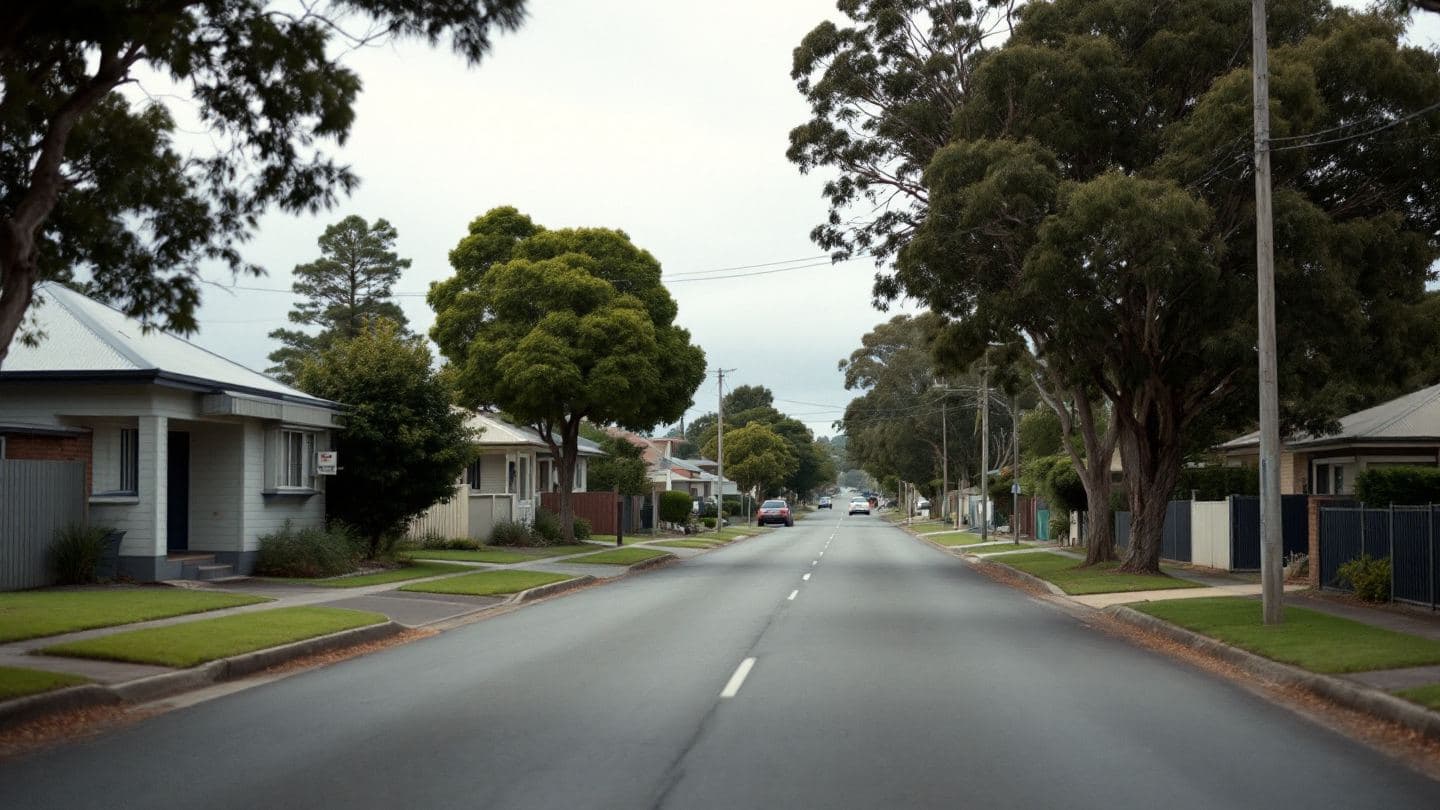
The Sunshine Coast has no permit, no registration form and no annual fee for short-term letting. That leads a lot of owners to assume there are no rules. There are, they just sit in less obvious places: the planning scheme, the rates system, body corporate law and general nuisance legislation.
This guide covers the Sunshine Coast Regional Council area, from Caloundra to Coolum and inland to the hinterland. Noosa Shire is a different council with a much stricter regime, covered in a short section below and in our separate Noosa short stay letting guide.
It is general information as at September 2026, not legal or planning advice. Rules change, and council's own planning staff or a town planner can confirm the position for your specific lot.
The four layers of rules
| Layer | Who sets it | What it controls |
|---|---|---|
| Planning scheme | Sunshine Coast Council | Whether short-term accommodation is a lawful use on your lot |
| Rates | Sunshine Coast Council | How much you pay in general rates once the property is let short-term |
| Body corporate | Your scheme's by-laws, under state law | What a unit or townhouse owner can and cannot do |
| State law | Queensland Government | Noise, smoke alarms, agent licensing, tax |
Planning rules: when you need approval
How the planning scheme treats short-term accommodation
The Sunshine Coast Planning Scheme 2014 defines "short-term accommodation" as a distinct land use, broadly premises used to provide accommodation to tourists or travellers for a temporary period, which includes a dwelling house rented out as a holiday house (BNBCalc, Sunshine Coast regulation guide). That matters because it is a different use from "dwelling house", and changing the use of land can be assessable development.
Whether you need a development approval depends on the zone:
- Low density residential zone (most detached-house suburbs): short-term accommodation is generally impact assessable, meaning a full development application with public notification and the possibility of neighbour submissions.
- Medium and high density residential, tourist accommodation and centre zones: generally code assessable, meaning an application is still required but without public notification.
These summaries come from third-party guides and council's own information sheet on short-term accommodation (Sunshine Coast Council, Short-term accommodation information sheet). Check the zone for your lot on council's mapping and read the zone code and tables of assessment yourself, or have a planner do it.
Existing use rights
A lot of Sunshine Coast holiday houses have been let to visitors for decades. Council acknowledges that dwellings established under former planning schemes may hold existing use rights for short-term holiday letting, and its planning staff can advise whether that applies or whether a new approval is needed (Sunshine Coast Council, planning scheme help).
Existing use rights are valuable but fragile. They generally depend on continuous use and can be lost if the use stops for an extended period or intensifies materially. If you are buying a property on the strength of existing use rights, get evidence (old booking records, tax returns, agent statements) before settlement.
What an application costs
Impact assessable applications are not cheap. Third-party summaries put the base development application fee for short-term accommodation at several thousand dollars plus a per-bed component, with a loading for impact assessment, before any planning consultant fees (BNBCalc). Treat those numbers as indicative and check council's current fees and charges schedule.
Enforcement in practice
Council's approach to short-term accommodation has historically been complaint-driven rather than proactive. In plain terms, many unapproved holiday houses operate without ever hearing from council. That is not a legal defence, and the maximum penalty for carrying out assessable development without approval under the Planning Act 2016 is 4,500 penalty units. At the 2026-27 penalty unit value of $172.70 (Queensland Law Society Proctor, penalty unit increase), that is a theoretical maximum well above $700,000. Actual outcomes are usually a show cause notice, then an enforcement notice requiring the use to stop or be regularised.
The new planning scheme and 2025-2026 changes
Council is replacing the 2014 scheme. The proposed new Sunshine Coast Planning Scheme went out for formal consultation from 15 July to 19 September 2025 and attracted around 4,600 submissions (Sunshine Coast Council, new planning scheme project).
For hosts, the relevant proposal is a new dedicated Short-Term Accommodation Code alongside new Rooming Accommodation and Dwelling House (Small Lot) codes (Have Your Say Sunshine Coast, proposed planning scheme). A standalone code usually means clearer, more specific criteria for where and how short-term letting is supported.
As at September 2026, council's post-consultation review is still under way and it has said decisions should not be based on the proposed scheme because it is subject to change. No adoption date has been announced. If you are planning a purchase or a large renovation for holiday letting, this is the main regulatory uncertainty to watch.
Rates: the transitory accommodation category
This is the rule most Sunshine Coast hosts actually feel. Council uses differential general rates, and properties that are not the owner's principal place of residence and are used for short-term letting are placed in a transitory accommodation category (codes such as 16T, 17T, 18T, 19T, 27T and 29T) charged at a higher cents-in-the-dollar rate than standard residential (Sunshine Coast Council, rates information).
Two points worth knowing:
- In the 2025-26 budget council deliberately raised the transitory accommodation rate for houses more sharply than for units, stating the aim was to encourage houses back into the long-term rental market (Sunshine Coast Council, Budget 2025-26).
- If you use a non-domiciled property yourself for 28 days or more in a six-month rating period, you can lodge an objection form to have the category adjusted for that period (Sunshine Coast Council, rates information).
The exact rate in the dollar and minimum charge are in the 2026-27 Revenue Statement. Ask your manager or accountant to factor the higher rates into your income forecast, since the difference against a standard residential category can be substantial.
Body corporate by-laws for units and townhouses
Many Mooloolaba, Maroochydore, Caloundra and Coolum short-stays are units. Owners often ask whether the body corporate can stop them letting short-term.
Under the Body Corporate and Community Management Act 1997, a by-law cannot restrict the type of residential use of a lot if the lot may lawfully be used for residential purposes. QCAT applied this in the Hilton Park decision, finding that holiday letting is a residential use and a by-law prohibiting it was invalid (ABKJ Lawyers, Airbnb and body corporate schemes in Queensland).
The exception is the small number of older schemes still regulated under the Building Units and Group Titles Act 1980, where a District Court decision (Fairway Island) upheld a by-law restricting lets of under one month (Property Bridge, Queensland bodies corporate cannot prohibit short term letting).
What a body corporate can still do:
- Enforce by-laws about noise, behaviour, parking, pool use and common property against you as owner, for your guests' conduct.
- Restrict things like keys, key safes, signage and fob issuing.
- In some resort complexes, the on-site manager holds letting rights and the scheme may be zoned or approved specifically for tourist accommodation, which is a different (and usually more permissive) planning situation.
Read the by-laws and the community management statement before you buy or list.
Noise, parties and complaints
Sunshine Coast Council does not have a short-stay hotline or a code of conduct like Noosa's. Complaints run through ordinary channels:
- Loud parties in progress: neighbours call police. Council does not respond to a party as it happens.
- Ongoing nuisance noise: council handles complaints under the Environmental Protection Act 1994. Its process usually involves a nuisance diary (typically 21 days) and, if the noise continues, an officer assessing it from inside the affected home (Sunshine Coast Council, noise nuisances).
- Unapproved use: a persistent complaint from a neighbour about a "party house" is the most common way an unapproved short-term accommodation use comes to council's attention and ends up in planning enforcement.
Practical protection for owners is mostly self-regulation: no-party house rules, guest screening, occupancy limits, noise monitoring devices, and a manager who can get someone to the door quickly.
State-level rules that apply everywhere in Queensland
Queensland has no state short-stay register, night cap or levy. The 2023 state review recommended a register but it has not been legislated, and regulation remains council by council (Lane Property, Queensland short-term rental rules guide). Things that do apply:
- Smoke alarms: dwellings that are sold or leased must have interconnected photoelectric alarms in every bedroom, hallways and on each level, and all dwellings must comply by 2027 (Queensland Fire Department, smoke alarms). Short-term letting is treated the same way; get it done.
- Agent licensing and trust accounts: if a manager receives money on your behalf as a property agent, the Property Occupations Act 2014 requires a trust account. See our guide on what to check in a management agreement.
- Tax: short-stay income is assessable, deductions are apportioned for private use, and residential accommodation is input-taxed so GST is not normally charged. The ATO receives platform data under the Sharing Economy Reporting Regime (Bentleys, Airbnb tax guide 2026).
A note on Noosa
If your property is in Noosa Shire (Noosa Heads, Sunshine Beach, Peregian Beach north of the shire boundary, Tewantin, Cooroy and the Noosa hinterland), none of the above is the full story. Noosa has had a Short Stay Letting and Home Hosted Accommodation Local Law since February 2022 requiring approval, an annual renewal fee, a 24/7 contact person who responds within 30 minutes, a hotline sign on the property and a guest code of conduct (Noosa Shire Council). From 26 September 2025 Noosa also tightened its planning scheme so that ongoing whole-house short-term letting is an inconsistent use in residential zones.
Read our full Noosa short stay letting local law guide before you list there.
How a manager helps with compliance
A good Sunshine Coast manager will not get you a planning approval, but they will:
- Tell you honestly whether your zone is a problem before you spend money on furniture.
- Point you to a town planner if an application or an existing use rights assessment is needed.
- Set house rules, occupancy caps and screening that keep neighbours off the phone to council.
- Provide a real person who can attend the property when something goes wrong at 11pm.
- Keep smoke alarm, pool safety and insurance certificates current.
- Explain the transitory accommodation rates impact in your net return.
Ask any manager you are considering how many of their properties have had a council complaint in the last year, and what they did about it. The answer tells you more than the brochure.
Compare managers on the Sunshine Coast
StayManaged lists Sunshine Coast and Noosa managers with their fees, service levels and compliance support so you can pick one that knows the rules for your area.